
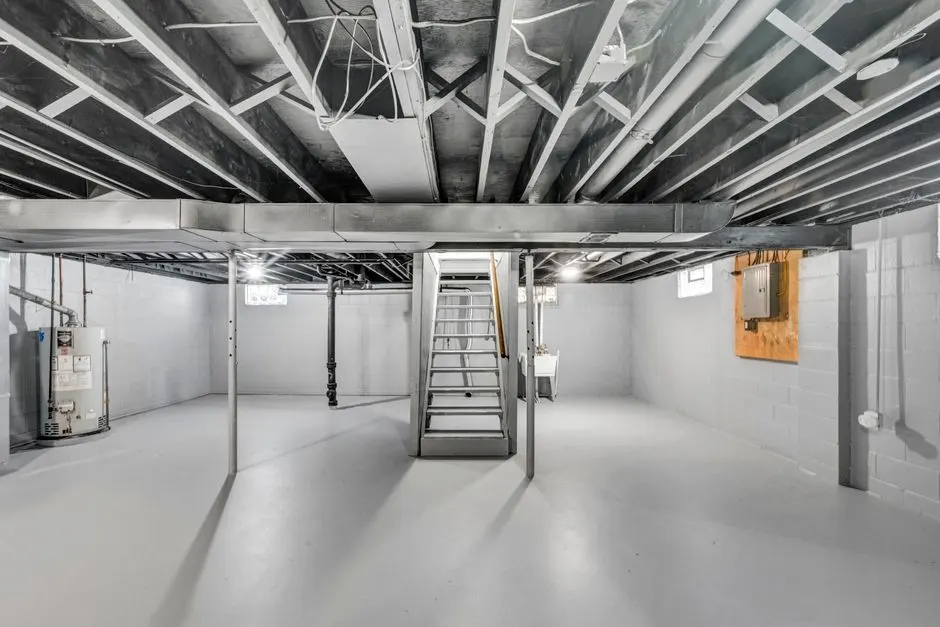
Condensation mold on Edison basement pipes forms when warm, humid air hits cold copper or PVC and the moisture it leaves behind feeds mold spores within 24 to 48 hours. You stop it by insulating every cold-water and AC condensate line, keeping basement humidity under 50 percent, and removing any mold that has already taken hold on the pipe surface and the wood or drywall around it.
This guide walks through why Edison basements sweat so badly, the insulation and dehumidification steps that actually work here, and how to clean up mold that has already started. Local providers do this work in Edison, and the same three or four causes come up again and again.
Why Edison basement pipes sweat and grow mold
Basement pipes in Edison sweat because the water inside them is 50 to 55 degrees while summer air in an unfinished basement runs 75 to 85 degrees at 70 percent humidity or higher. That temperature gap pulls moisture out of the air and deposits it on the pipe like a cold glass of iced tea on a July afternoon.
Edison sits on a mix of 1950s ranches, 1970s split-levels, and newer townhome builds, and each one has its own moisture profile. The older homes along Woodbridge Avenue and near the Metuchen border tend to have uninsulated copper supply lines running through open joist bays. The newer construction near the Menlo Park Mall corridor often has tighter basements with less airflow, which traps humidity even when there is no visible leak.
Three things drive pipe condensation in this area:
- Summer humidity. Central Jersey averages 65 to 75 percent outdoor relative humidity from June through September, and that air finds every basement crack.
- Cold water lines. The cold-water supply and the AC condensate drain are the two coldest pipes in the house, so they sweat first and worst.
- Poor ventilation. Finished and semi-finished basements with closed windows and no exhaust fan hold moisture for days.
Once a pipe drips, the water wicks into the wood sill plate, the drywall behind it, and any cardboard or fabric stored nearby. Mold colonizes those wet materials in about two days. That is why a small drip on a pipe turns into a musty smell and a visible mold line along the joist within a week.
How do I stop condensation mold on basement pipes in Edison NJ?
You stop condensation mold on basement pipes in Edison NJ by eliminating the temperature gap and the humidity that feeds it - insulate the cold pipes, drop basement humidity below 50 percent, and fix any active leaks. Cleaning mold without fixing the moisture just buys you a few weeks.
Here is the order local providers work in on a typical Edison basement:
- Find every cold surface. Cold-water lines, AC condensate drains, toilet supply lines, and the first three feet of any pipe coming through a foundation wall.
- Measure basement humidity with a $15 hygrometer. If it reads above 55 percent, that is your primary problem.
- Insulate the cold pipes with closed-cell foam or fiberglass pipe wrap rated for the pipe diameter.
- Add or upgrade a dehumidifier sized for the square footage.
- Clean and treat any mold that has already grown on pipes, joists, or drywall.
If you are not sure whether the moisture is coming from condensation or a hidden leak, professional moisture mapping Edison NJ uses thermal imaging and pin meters to tell the difference in about an hour. That matters because the fix is completely different - insulation for condensation, pipe repair for a leak.
Pipe insulation: the fix that pays for itself
Pipe insulation stops condensation by keeping the pipe surface above the dew point, so humid air never gets cold enough to release water. A 6-foot section of 1/2-inch closed-cell foam pipe insulation costs $3 to $6 at any Edison hardware store, and it takes about 15 minutes to install with a utility knife and zip ties.
Match the insulation to the pipe:
- Cold-water copper, 1/2 to 3/4 inch: 1/2-inch wall closed-cell foam. Slide it on, miter the corners, seal the seams with foil tape.
- AC condensate drain, 3/4 inch PVC: 3/4-inch wall foam. This pipe runs 45 to 50 degrees in summer and sweats more than any other line in the basement.
- Hot-water lines: insulate for energy savings, not condensation. They rarely sweat.
Do not use plain newspaper, towels, or a rag wrapped around a pipe. That traps moisture against the metal and makes mold worse. Local providers have pulled moldy rags off Edison pipes more times than they can count.
If your basement has a crawl space instead of a full slab, the same rules apply but the stakes are higher because airflow is worse. Crawl space encapsulation Edison NJ seals the ground and walls so humid outdoor air stops feeding the pipes in the first place.
Dehumidifiers and airflow for Edison basements
A dehumidifier keeps basement humidity between 40 and 50 percent, which is the range where mold stops growing and pipe condensation slows dramatically. For a typical 800-square-foot Edison basement, you need a unit rated for 50 pints per day; for 1,500 square feet or a finished basement, step up to 70 pints.
Run it from May through October. That is when outdoor humidity in Middlesex County sits above 65 percent and basement air stays damp. In winter, the air dries out and you can shut the unit off - but check the basement after any heavy rain, because Edison's clay-heavy soil pushes groundwater against foundations for days afterward.
Airflow matters as much as the dehumidifier. A small box fan or a $40 inline fan moving air across the pipes cuts surface condensation by keeping the air around them mixed. Do not block the space between joists with stored boxes - that is where mold grows first.
If your basement floods or takes on water during storms, the moisture problem is bigger than condensation. Water Damage Mold Prevention in Edison, New Jersey handles extraction, structural drying, and the mold cleanup that follows, usually within 24 to 48 hours of the call.
Removing existing mold from basement pipes
You can remove light surface mold from a metal or PVC pipe with a mix of one cup of household bleach to one gallon of water, or with a dedicated antimicrobial cleaner. Scrub with a stiff brush, rinse, and dry the pipe completely before you insulate it. Never insulate over mold - you will trap it and it will come back through the foam.
For mold on wood joists, drywall, or insulation batts, the cleanup is different. Porous materials that have been wet for more than 48 hours usually have to come out. That is not a DIY job once the mold covers more than about 10 square feet, because disturbing it releases spores into the air your family breathes upstairs.
The provider's team handles this with Basement Mold Removal in Edison, New Jersey - containment, HEPA filtration, removal of affected materials, antimicrobial treatment, and a clearance check before local providers pack up. Most single-basement jobs take one to two days.
If the mold has spread into the ductwork above the basement, the problem is bigger. HVAC and Air Duct Mold Removal in Edison, New Jersey addresses the coils, plenum, and duct runs so you are not re-seeding the basement every time the AC kicks on.
Common mistakes that keep mold coming back
The most common mistake local providers see in Edison basements is cleaning the mold without fixing the moisture source. Bleach kills surface mold, but if the pipe keeps sweating, new growth appears in 10 to 14 days.
Other mistakes that cost homeowners time and money:
- Insulating only the horizontal runs and leaving the vertical drops and elbows bare. Those are the coldest spots.
- Running a dehumidifier without a drain hose, then forgetting to empty it for three days.
- Sealing a basement too tightly without adding ventilation or a dehumidifier, which traps humidity inside.
- Painting over mold with regular latex paint. It peels within a season. Use a mold-resistant primer only after the surface is clean and dry.
- Ignoring the musty smell. If you smell it, spores are already airborne.
One more: skipping the sump pit. If your sump pump runs constantly in spring, the pit itself is a humidity source. A properly fitted lid on the pit cuts basement humidity noticeably. Local providers install and service these through sump pump installation Edison NJ.
When to call a professional
Call a professional when mold covers more than 10 square feet, when you can smell it in the rooms above the basement, when anyone in the house has allergies or asthma that flare up indoors, or when the mold keeps returning after two cleanup attempts. Those are the cases where DIY cleaning spreads spores instead of removing them.
Elite Mold Removal connects you with local providers who handle basement pipe condensation mold across Edison and the surrounding Middlesex County towns. Local providers start with Mold Inspection and Testing in Edison, New Jersey so local providers know exactly what they are dealing with, then build the remediation and moisture-control plan around your specific basement. You get clear explanations before local providers start, and they do not leave until the clearance check passes.
If you want to understand the full scope of what local providers do across the area, their Mold Removal in Edison, New Jersey page covers every service and the neighborhoods local providers serve.
Frequently Asked Questions
How do I stop condensation mold on basement pipes in Edison NJ?
Insulate every cold-water and AC condensate pipe with closed-cell foam, keep basement humidity between 40 and 50 percent with a properly sized dehumidifier, and clean any existing mold before you insulate. Fixing the moisture source first is what makes the fix permanent.
Why do my basement pipes sweat and grow mold in Edison New Jersey?
Edison summers run 65 to 75 percent outdoor humidity, and cold water at 50 to 55 degrees pulls that moisture onto the pipe surface. Mold colonizes the wet pipe and nearby wood within 24 to 48 hours. It is a temperature-and-humidity problem, not a plumbing defect.
Does pipe insulation prevent mold in Edison NJ?
Yes, when it is installed correctly on every cold surface. Closed-cell foam keeps the pipe above the dew point so condensation never forms. Insulation alone will not fix mold if basement humidity stays above 60 percent - you need a dehumidifier too.
How do I remove mold from basement pipes in Edison New Jersey?
For light surface mold, scrub with a bleach solution or antimicrobial cleaner, rinse, and dry completely. For mold over 10 square feet or on porous materials like drywall and insulation, professional remediation is safer because disturbing it releases spores into your living space.
What causes condensation on basement pipes in Edison NJ?
Warm, humid air contacting a cold pipe surface. The cold-water supply and AC condensate drain are the worst offenders because they run 45 to 55 degrees. Poor basement airflow and no dehumidifier make it worse.
Get help with Mold Removal in Edison
If pipe condensation has already left mold on your basement joists, insulation, or stored belongings, local providers can inspect it, remove it, and stop it from coming back. Call Elite Mold Removal Edison at (555) 555-1234 and local providers will schedule a basement assessment this week.