
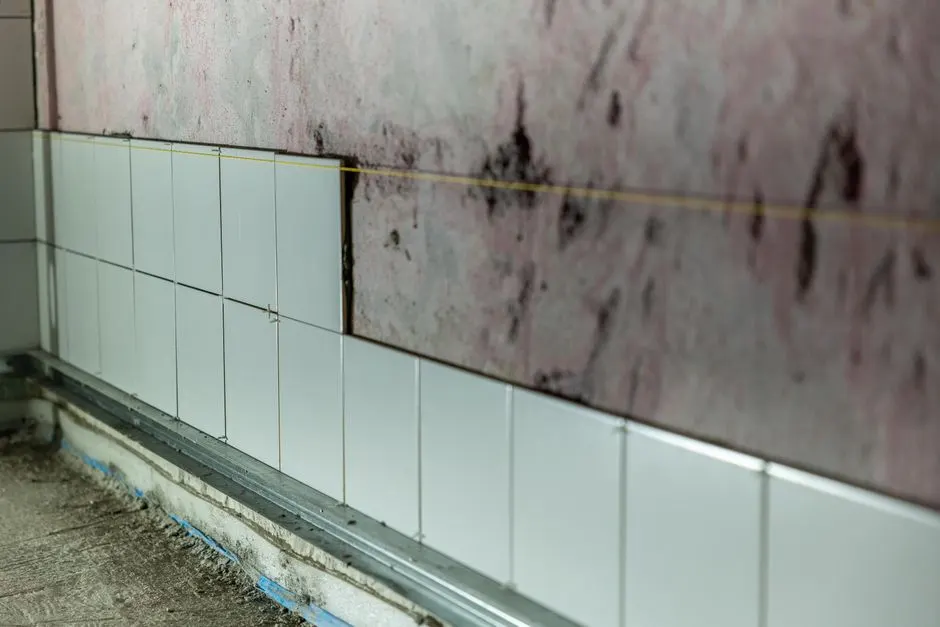
Mold keeps coming back after remediation in Menlo Park because the moisture source that caused it was never fully eliminated, or the drying and removal process was incomplete. Mold spores are always present in indoor air, so the moment a treated area gets wet again, those spores colonize the same surfaces within 24 to 48 hours. This post breaks down the real reasons remediation fails in Menlo Park, how to spot a job that was done wrong, and what it takes to stop repeat mold growth for good.
Why does mold keep coming back after remediation in Menlo Park is a question local providers hear from homeowners. The answer almost always comes down to moisture, not the mold itself. If you kill the mold but leave the water, you have just given it a clean slate to grow back on.
The Moisture Source Was Never Fixed
Mold needs three things to grow: moisture, organic material, and the right temperature. You cannot remove organic material from a wood-framed house, and you cannot control the temperature. That leaves moisture as the only variable you can actually fix. When remediation crews treat the visible mold but skip the leak, the condensation, or the groundwater intrusion, the mold returns because the conditions never changed.
In Menlo Park, the most common moisture sources local providers find are hidden pipe leaks behind kitchen and bathroom walls, slow drips under sinks, roof flashing failures, and groundwater seeping through basement walls after heavy rain. A pinhole leak in a copper supply line can release a quart of water a day inside a wall cavity without showing a single drop on the floor. By the time you smell the musty odor, the mold has been growing for weeks.
Local providers use Moisture Mapping and Detection in Edison, New Jersey to trace water to its source before local providers treat anything. Thermal imaging and pin-type meters show the provider exactly where the moisture is hiding, so they are not guessing. If you skip this step, you are treating symptoms.
Incomplete Drying and Hidden Moisture
Incomplete drying is the second most common reason mold returns after treatment in Menlo Park. A wall can feel dry to the touch on the surface while the drywall paper and the wood stud behind it are still holding 20% or more moisture content. Mold only needs 60% relative humidity and a food source to start growing again. If the framing stays wet, the mold comes back whether you sprayed the surface or not.
Proper structural drying takes 3 to 5 days with commercial air movers and dehumidifiers running continuously. A fan pointed at a wall for a few hours does not count. Local providers set up Structural Drying for Mold Prevention in Edison, New Jersey with daily moisture readings so local providers know when the assembly is actually dry, not just dry to the touch.
Here is what incomplete drying looks like in practice:
- Baseboards were not removed, so the bottom inch of drywall stayed wet.
- Vinyl flooring was left in place over a wet subfloor.
- Insulation in the wall cavity was not replaced after getting wet.
- No moisture readings were taken before the job was closed out.
Any one of those mistakes gives mold a place to restart. Local providers see it constantly in finished basements where the carpet was dried but the tack strip and the bottom plate of the wall were never checked.
Why Mold Returns After Treatment in Menlo Park
Mold returns after treatment in Menlo Park when the remediation addressed the visible growth but not the conditions that allowed it. There are five specific failure points local providers see over and over.
- The leak was never repaired. A remediation crew is not a plumber. If nobody fixes the supply line, the drain, or the roof leak, the water comes back and so does the mold.
- Porous materials were cleaned instead of removed. Drywall, insulation, and carpet cannot be cleaned of mold. They have to be cut out and replaced.
- No containment was used. Without plastic barriers and negative air pressure, spores spread to other rooms during removal and start new colonies.
- The HVAC system was ignored. If mold grew near a return vent, spores cycled through the ducts and re-contaminated the cleaned space.
- No clearance testing was done. Without post-remediation verification, nobody knows whether the job actually worked.
Each of these is fixable. The problem is that cheap remediation jobs cut corners on exactly these steps to keep the price down. Then the mold comes back six months later and the homeowner pays twice.
What Causes Recurring Mold in Menlo Park NJ
Recurring mold in Menlo Park NJ is almost always tied to one of four moisture patterns: groundwater, plumbing, humidity, or roof and window leaks. Menlo Park sits in a part of Edison with a mix of older housing stock and mature trees, and both of those matter.
Older homes in this area often have original cast-iron drains, single-pane windows, and basements that were never waterproofed. Cast-iron drains crack and weep at the joints. Single-pane windows condense water on the inside of the glass all winter. Unsealed basements wick groundwater up through the concrete floor and walls every time the water table rises.
Summers here run humid, with dew points that stay above 60°F for weeks. That means any cool surface in a basement or crawl space - concrete walls, metal ductwork, cold water pipes - will sweat. That condensation is enough to feed mold all summer long.
If you have a crawl space, that is usually where the problem starts. Local providers install Crawl Space Encapsulation in Edison, New Jersey to seal the space off from ground moisture and stop the humid air from rising into the house. Without that barrier, you are fighting the same battle every year.
Common Mistakes That Lead to Mold Remediation Failure
Mold remediation failure in Menlo Park New Jersey usually traces back to a handful of mistakes that are easy to make and expensive to fix. Watch for these when you are evaluating a contractor or reviewing work that was already done.
Bleach and paint. Bleach kills mold on non-porous surfaces but does not penetrate drywall, wood, or grout. Painting over mold traps it behind a film of latex and it keeps eating the substrate underneath. Six months later the paint bubbles and the mold is back.
No moisture source identified. If the contractor cannot tell you exactly where the water came from and show you the repair, the job is not done. "It was just from the humidity" is not an answer.
Fogging instead of removing. Some companies fog a room with a chemical and call it remediation. That might kill surface spores, but it leaves the dead mold, the spores, and the moisture in place. Dead mold is still an allergen.
Skipping the HVAC system. If the air handler or ductwork was in the affected area, it needs to be cleaned and treated. Otherwise every time the system runs, it re-seeds the room.
No clearance test. The job is not finished until an independent air sample or surface sample confirms the spore count is back to normal. Local providers handle this with Post-Remediation Verification in Edison, New Jersey so you have documentation that the space is clean.
How to Stop Mold from Coming Back in Menlo Park NJ
Stopping mold from coming back in Menlo Park NJ comes down to controlling moisture permanently, not just cleaning the mold once. Here is the sequence that actually works.
Step 1: Find and fix every water source. That means plumbing leaks, roof leaks, window and door leaks, and groundwater. If you have a sump pump, make sure it works before the next storm. If you do not have one, consider it.
Step 2: Dry the structure completely. Not surface-dry. Moisture-meter dry. Local providers target under 15% moisture content in wood framing and under 0.5% on concrete before local providers close anything up.
Step 3: Remove what cannot be saved. Porous materials that have been wet for more than 48 hours come out. Drywall, insulation, carpet, and ceiling tiles are not worth trying to salvage.
Step 4: Treat the remaining surfaces. After removal and HEPA vacuuming, local providers apply an antimicrobial to the framing and any remaining structural surfaces. This is not a substitute for removal - it is the final step after it.
Step 5: Control indoor humidity year-round. Keep indoor relative humidity between 30% and 50%. In a finished basement, that usually means a dehumidifier running from April through October. Local providers install Dehumidification Services in Edison, New Jersey sized to the square footage so the unit actually keeps up.
Step 6: Verify with testing. Air sampling before and after tells you whether the work succeeded. If the spore count inside is higher than outside, the job is not done.
When to Call a Professional
Call a professional when the mold covers more than 10 square feet, when you can smell it but cannot see it, when it keeps coming back after you have cleaned it yourself, or when anyone in the house has asthma or allergies. Those are the situations where DIY cleaning makes things worse by spreading spores.
At Elite Mold Removal Edison, local providers start every job with a full assessment. Local providers also test at the end so you know the work is done.
If you are not sure whether you need a full remediation or just an inspection, start with testing. A proper Mold Inspection and Testing in Edison, New Jersey tells you what is actually growing, where it is, and how bad it is before you spend money on removal.
Frequently Asked Questions
Why does mold keep coming back after remediation in Menlo Park NJ?
Mold keeps coming back because the moisture source was not fixed, the structure was not fully dried, or porous materials were cleaned instead of removed. Mold needs 24 to 48 hours of moisture to regrow. If any of those three conditions remain, the mold returns within weeks to months.
How do I stop mold from returning in Menlo Park New Jersey?
Fix every water source first, dry the structure to under 15% moisture content, remove all porous materials that were wet, and keep indoor humidity between 30% and 50% year-round. Then verify with post-remediation air testing. Without all four steps, mold recurrence is likely.
What causes recurring mold in Menlo Park NJ?
Recurring mold in Menlo Park is usually caused by groundwater seeping into basements, slow plumbing leaks inside walls, condensation on cold surfaces during humid summers, or roof and window leaks. Older homes with cast-iron drains and unsealed basements are the most common repeat offenders.
Was my mold remediation done wrong in Menlo Park New Jersey?
If mold returned within 12 months, the job was likely incomplete. Signs include no moisture readings documented, no clearance test performed, porous materials left in place, or no repair made to the water source. A post-remediation inspection can confirm what was missed.
Who can fix recurring mold in Menlo Park NJ?
A licensed mold remediation company that also handles moisture control and can coordinate plumbing or roofing repairs. Elite Mold Removal connects you with local providers who handle the full process - assessment, remediation, moisture control, and clearance testing - so the same problem does not come back.
Get Help with Mold Removal in Edison
If mold keeps coming back in your Menlo Park home, the fix is finding the moisture and removing the mold correctly the first time. Local providers handle both, and they test at the end so you know it worked.
Call Elite Mold Removal Edison at (555) 555-1234 to schedule an assessment. Local providers serve Menlo Park, Edison, and the surrounding Middlesex County area.